Sunday, 17 October 2010

Yaegl family on ABC's Message Stick


Last week Bloodline Series on ABC TV's Message Stick featured The Randall-Parker Family from the Clarence River area in northern NSW. The "stars' of the program were Reverend Lenore Parker, a Deacon of the Anglican Church, and her daughters Frances Belle, Susan and Catherine.


Message Stick presenter Miriam Corowa opened with:

Yet, like other Yaegl people, they draw their strength from those generations that have walked before them. I hope you enjoy Bloodlines.

The program was terrific. It provided a wonderful opportunity for viewers to gain a better understanding of how Yaegl people draw their strength from the generations that have walked before them.

Lenore and her daughters paid tribute to the pivotal role of their mother and grandmother, respectively.

Lenore Parker:
I'm a Yaegl woman, born in this beautiful part of Australia, the north-east coast of Australia, in Yaegl country, and I'm the eldest daughter of the marriage of Wallace and Jesse. And...I have nine other brothers and sisters from that union.

Frances Belle Parker:
My nan ... had a big presence, but she was so gentle, like one of the most gentle people that you could ever meet.... even now, when she's not here, her spirit always is.

Frances Belle
Susan Parker:
Nan just had the most gentle nature...she'd always make time for you ...she was happiest when she was with her family.

Susan
Catherine
Lenore with her sister Judy after Lenore's ordination


Credits: Words and images from ABC TV's Message Stick

MDBA understatement of the year!


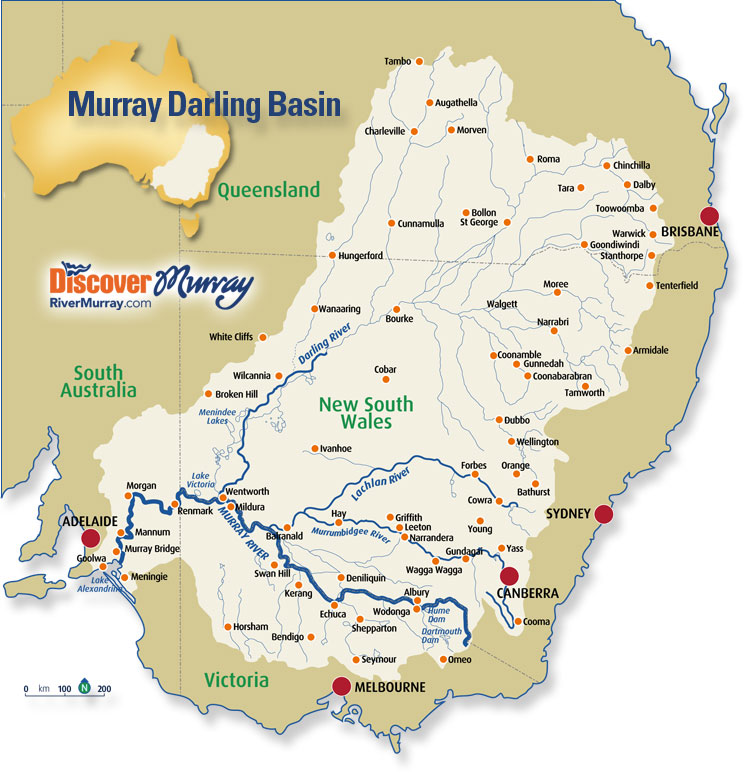
Even a bad situation can elicit a laugh or two as Mike Taylor demonstrates with this classic understatement reported by Aunty ABC last week:"But Victorian farmers in Shepparton believe diverting water from the Clarence is still an option. "I think the Murray Darling Basin Commission has done a marvellous job of identifying the needs of the environment. I was just wondering if you could give it a little bit of attention to the needs of irrigators by redirecting some of the big flows of water that run straight into the sea every year like on the Clarence River in NSW and redirect them through a tunnel and through to the darling river and supply a new stream of income water to the whole pool in the environment rather than cutting back all the time. We need more water and there's thousands and thousands of gigalitres of water that just run straight into the sea in this country." Murray Darling Basin Authority Chair Mike Taylor told the Shepparton meeting this week, it's not on the agenda."First of all I'm going to do two things here. I'm going to explain what our brief is which is to deal with the water that's in the Murray Darling Basin so we don't actually get to look at those alternatives. The second bit I am going to say though about taking water from the Clarence, having talked to many people who operate on the Clarence, they're not actually keen on diverting the water across the Great Dividing Range."
Too bluidy right we're not keen!

Saturday, 16 October 2010

No comment required ... the picture says it all

Source: The Readers Panel SMH 16/10/10

That effin b@stard Tony Burke!


Federal Water Minister Tony Burke thinks he's playing cute by not ruling out damming the Clarence River and piping water across the Great Dividing Range into the Murray Darling Basin.
Does he really think that the Clarence Valley mob are so stupid that they don't know he'd pander to the Independents on just about anything if it meant that Labor could stay on top of the muck heap?
It's as plain as a pikestaff that wannabe water vandal Tony Windsor is going after NSW coastal rivers and that the Clarence heads his wish list.
This is going to be a trying time for the Labor Member for Page Janelle Saffin as she pits herself against the big boys in her party and vested interests in the Basin.
As for the Coalition - even though they probably hold the most federal seats along the Murray Darling they can sit back and let Windsor and the irrigators do all the political biting and tearing at the Gillard Government without having to show their hand until the House votes on the final version of the Basin Plan.

Journalist Rodney Stevens writing in The Daily Examiner on 16th of October:
"FEDERAL Water Minister Tony Burke has not ruled out diverting Clarence River water as a solution to irrigation problems in the Murray Darling basin.
Facing severe backlash from irate farmers about the proposed reduction in irrigation allocations at public consultation meetings held by the Murray Darling Basin Authority this week, Mr Burke said he would not discount any options as solutions to help revive Australia's 'food bowl'.
"The consultation is real and I'm not going to play the game of ruling things in or out," he said.
"Lots of options will be put on the table in the next few months and I don't want people to hesitate from putting ideas on the table."
Mr Burke hinted the enormousness of the engineering involved in a diversion may save the Clarence River.
"Certainly in the past, projects like this have not been considered as practical as other options," he said.
Outraged at the suggestion of any potential for diversion by Minister Burke, Federal Member for Page Janelle Saffin said she would fight to see that the Clarence remained untouched.
"I will stand by my community. Not one drop goes from the Clarence," she said.
Ms Saffin said she would be raising the issue of any potential diversion in parliament next week.
"They can all rack off. I will make that clear next week," she said."

Water raiders begin to grab control of Murray Darling Basin Plan debate?

From A Clarence Valley Protest earlier this morning:

One has to wonder if the Gillard Government has lost control of the Murray Darling Basin Plan guidelines debate or whether the Murray-Darling Basin Authority has ceded control of its community consultation process and, what this might mean for NSW North Coast Rivers which are often seen by primary industry as a preferred alternative to curtailment of water rights/cuts in annual allocations.

One well-known would be water raider, Federal Independent MP for New England Tony Windsor is to chair the parliamentary inquiry into social and economic impacts of any proposed basin plan.

This is Mr. Windsor in a 2007 media release:

Mr. Windsor said he was also keen to see the possible diversion of the Clarence River examined under the new policy.

"The ideal site to divert the Clarence to is the New England Electorate...."

The Murray Darling Association is to chair two community forums in Broken Hill and Menindee on 19 and 20 October 2010.

In 2009 this association at its national conference and annual general meeting endorsed these motions:

13.2 Clarence River Region 2
For many years, Region 2 has been raising the issue of a feasibility study to dam part of theClarence River and divert some of the water inland to the Murray-Darling Basin to help alleviatewater shortages. The Federal Government has made it quite clear that it will not support any suchproject but the NSW Government has not been as clear on the issue. Some years ago, theAssociation supported a feasibility study into the idea.
RECOMMENDATION: That the NSW Government be asked to respond directly tocommunity requests over the years that part of the Clarence River be dammed to minimise flood damage and to divert some of the water inland to the Murray-Darling Basin.

13.3 Clarence River diversion Region 6
This proposed diversion of the Clarence River was first discussed in the 1930s. The FraserGovernment allocated $4 million to fund a feasibility study into the scheme. The HawkeGovernment discontinued this. The proposal, if feasible, would involve the construction of aheadwater dam on the Clarence River, with a 22km tunnel under the Gibralta Ranges in NorthernNSW. This tunnel would emerge on the Murray-Darling Basin side of the ranges and feed intothe Beardy River, then the McIntyre River and, ultimately into the Basin. The Gibralta Ranges aresituated in one of the highest rainfall areas in Australia. Benefits of the scheme include:• The dams would have storage capacity approaching that of the Snowy MountainsScheme.• The capacity of the headwater storage would provide flood control to the Clarence Valley.• The diversion would only require 24% of the total maximum storage volumes of water toprovide similar volumes of water to the Basin as the Snowy Mountains Scheme.• The generation of hydro-electricity is another major benefit.This motion is not a request to build the scheme, but to revisit it in the context of recent climaticevents and over-allocations in the Murray Darling Basin.
RECOMMENDATION: That the MDA requests the Federal Government, as a matter of urgency, to commission a report on the Clarence River Diversion Proposal relative to water flows through the Murray-Darling system and to make that report widely available.

Australia gets bad report card from WWF in 2010


10 national biocapacities in 2007:
Ten countries alone accounted for over 60% of the Earth's biocapacity
(Global Footprint Network, 2010)

The World Wildlife Fund has released its 2010 Living Planet Report.

Australia does not fare well in the report's latest global assessment.
With an enviously high national biocapacity* Australians remain profligate in how they consume vital resources and the nation's ecological footprint is disproportionate to its population size.

Of 152 countries ranked in order of their destruction of the world's natural resources, Australia is eighth, behind nations such as the United Arab Emirates, the US and Canada - performing much worse than countries including China and the United Kingdom.

A disturbing fact that for which all of us (including those Murray-Darling Basin communities currently agitating over water rights) should reserve some serious thinking time.


*Biocapacity refers to the capacity of a given biologically productive area to generate an on-going supply of renewable resources and to absorb its spillover wastes.
Unsustainability occurs if the area’s ecological footprint exceeds its biocapacity.
Source: GreenFacts

Friday, 15 October 2010

Water is a precious commodity in Siem Reap, Cambodia

Cambodia's Angkor Wat has almost 2 million visitors a year. The visitors, many of whom stay in 5-star accommodation in the nearby city of Siem Reap, are putting increasing pressure on the scarce water resource.


The plush tourist resorts with fairways of lawns soak up the area's valuable water supply and are in stark contrast to the homes and the lives of the locals of Siem Reap.

Water is a precious commodity in Siem Reap, particularly during the dry season, when tourist numbers are highest. And the population of the city, barely five kilometres from Angkor Wat, has doubled in a little more than a decade to about 200,000.

Water is sucked from groundwater under the city of Siem Reap and as a consequence the stability of Angkor Wat, a centuries-old World Heritage-listed landmark, is under threat.

Local authorities have expressed concerns that thousands of illegal private pumps have been sunk across the city, pulling millions of litres of water from the ground each day.

However, the very survival of the local community is dependent upon a clean and reliable water supply.

Locals living in Siem Reap's hinterland include thousands who are lake dwellers - they live permanently in building along the banks of the lake of Tonle Sap or on the lake itself. For them, clean fresh water is a major problem. Communal pumps, where they are available, are often some distance from the homes.

On a recent visit to Cambodia this writer did not stay in 5-star accommodation.

Credit: SMH

Tony Windsor takes a dangerous tack in water debate


From A Clarence Valley Protest on 14 October 2010:

Tony Windsor demonstrates a dangerous parochialism in water debate

Federal Independent MP for New England Tony Windsor has apparently threatened to push for alternatives to mass water buybacks, including redirecting water into the struggling Murray according to The Australian today.

Mr Windsor said that if the Murray-Darling Basin Authority was going to use climate change as part of its justification to take 3000-4000 gigalitres of water from irrigators, it could look at diverting water into the basin from areas of higher rainfall elsewhere...........
Mr Windsor said he would conduct an objective valley-by-valley analysis of where the authority's recommended cuts to water allocation could be tolerated. He said that where the risk of a significant socio-economic fallout was high, "there may be other strategies to fixing this not identified by the authority". He said "the political process" would examine these and other issues in the coming months.
Mr Windsor said the MDBA should not allow water to be taken away from irrigators on account of climate change, because they were not responsible for the problem.

Mr. Windsor does not elaborate on where any potential water diversion would originate except to vaguely point in the direction of far north Queensland.

However, as the
Clarence River began to be mentioned within days of the release of the Murray Darling Basin Authority's draft basin plan, on has to suspect that the fate of this NSW coastal river is once more being discussed by politicians and interested parties who are still unwilling or unable to understand that wrecking one catchment area to apply what is little more than a band-aid to the Murray-Darling catchment is not an environmentally or economically sustainable response.

The fact that the Gillard Government is so determined to cling to power that Minister for Sustainability, Environment, Water, Population and Communities Tony Burke could state: "I am certainly not going to reject it,"....."If Tony Windsor has ideas like that, then we'll talk them through" should be of concern to Clarence Valley communities.

“I stand by my community, not one drop goes from the Clarence”: Janelle Saffin, MP for Page


The Daily Examiner continues to warn Clarence Valley residents of the ongoing debate concerning damming and diverting fresh water from the Clarence River catchment in its 13 October 2010 article Clarence diversion not on agenda.

Thankfully, Federal Labor MP for Page Janelle Saffin continues to stand firm on the issue and support the Clarence community's opposition to any water raid.

Oi, Tony! Whatever happened to "No comment until I have appropriate details."


Tony Windsor is turning out to be a very ordinary pollie.
After telling us all he wouldn't comment until he had all the details on legislation, policy or proposals, he's one of the first out the gate talking up water diversion into the Murray-Darling from other regions so that his constituents can fly in the face of the Basin Plan and continue their collective grossly unsustainable use of river and ground water in the face of the Basin Plan proposed guidelines.
No-one in the Northern Rivers is fooled by his clumsy artifice in this hypothetical query; "is it possible to repatriate that water to neutralise the effect of climate change in the Murray-Darling system by bringing water in?"
We all know bl**dy well which river his home ground voters will be opting for - our coastal Clarence River.
The same river which is salt for much of its course to the sea and you can walk across in dry times up where the fresh water flows.
A bloke doesn't have to look to undeveloped countries to find people willing to rape healthy rivers - all he has to do these days is look over the Great Dividing Range!

Thursday, 14 October 2010

Another Yamba 'local' sports star hits the big time

In keeping with the long-established tradition local media has of playing the 'local' ace card any time anyone who can be tracked via a long distance connection to the local area (even if, for example, it has to be via a second cousin five times removed) this blog is only too happy to claim the boyfriend of Donna Urquhart, who won a bronze medal in squash at the Delhi Games, as a 'local'.

Urquhart's boyfriend, Van Humphries, has been named in the 36-man Wallabies squad for their tour of Hong Kong and Europe.


Unfortunately, another local, young Kane Douglas, who has rocketed to prominence in Australian rugby and has just completed what can only be described as a hell-of-a-ride in 2010, didn't make the cut and isn't in the touring squad. Douglas, who popped up this year via Sydney's Southern Districts, first appeared on the Waratahs' bench but soon became a fixture in their run-on side.

Yamba's Cameron Pilley wins gold in Delhi


Yamba's Cameron Pilley and Taree's Kasey Brown have won gold in the mixed doubles squash competition at the Delhi Comonwealth Games. Pilley and Brown downed Kiwis Joelle King and Martin Knight 8-11, 11-7, 11-5.


The Age reported:  
The Australians appeared in trouble during an attritional opening game that went the way of the New Zealanders, but their superior agility and court movement eventually turned momentum their way. Pilley and Brown, both of whom had won bronze in earlier matches yesterday, clawed back from 3-0 down to win the second game, and breezed through the final game 11-5 to complete a forgettable afternoon for New Zealand in Delhi.
''We both played two matches today and we didn't lose,'' Pilley said. ''That's all we can do.''
Added Brown: ''It's very tiring. Your arm gets pretty sore. I think I've hit about a million forehands over the last four days. You get stiff, but I think doubles is more of a mental game … Physically it's different to singles.''
 Victory to Pilley and Brown may have bolstered Australia's lead atop the gold medal standings, but the team is on track to record its worst haul at the Commonwealth Games in 20 years. Australian teams have claimed in excess of 80 gold medals in each of their past four campaigns and, with just one day of competition remaining, they are guaranteed to fall short of that standard.
 Earlier, Brown and Donna Urquhart (also of Yamba) won bronze in an all-Australian third-place women's doubles play-off against Lisa Camilleri and Amelia Pittock. Pilley and Ryan Cuskelly also claimed bronze in the men's doubles over Scotland.

I've been filtered? Oh, that hurts!


Around the time Communications Minister Stephen Conroy began to tell Australia that the big ISPs were voluntarily filtering out net nasties I discovered I could no longer bring up a number of websites on the Internet at home, including the news aggregate site Kwoff.
Similarly The Political Sword was off the home viewing menu.
I did not connect these events and went hunting through my PC looking for what turned out to be a non-existent bug.
Because when I eventually changed my ISP to take advantage of better rates (leaving all my original operating and security systems intact) I suddenly found that all those sites which had been bringing up error and connection problem notices (and the odd verboten!) were once more accessible.
So what has been going on up in Dodo Land that innocuous web addresses are on some sort of voluntary black list?

Not A Paedo
Grafton