Thursday, 8 July 2021

No matter how Morrison & Co try to spin the Australian Treasury's 2021 Intergenerational Report, it reveals lacklustre economic growth expected over the next 40 years


In June 2021 the Australian Treasurer and Liberal MP for Kooyong, Josh Frydenberg released the Treasury’s 2021 Intergenerational Report: Australia over the next 40 years


Although a traditionally impartial Treasury complied most of the report’s contents, the partisan political nature of this report can be found kicking off at Line 19 of the Executive Summary, which starts with this untruthful statement:


Australia entered the COVID-19 pandemic from a position of economic and fiscal strength. The budget was in balance for the first time in 11 years…..


North Coast Voices readers would be well aware that 2019-20 national budget papers released in April 2019 forecast a then as yet unrealised balanced budget and return to surplus by 30 June 2020, with surpluses continuing over the medium term. This was a risky assertion to make on the basis of optimistic assumptions not hard facts.


Just how risky became apparent soon after February-March 2020 when the word “surplus” was quietly scrubbed from the Liberal-Nationals political lexicon due to the social and economic upheaval caused by both six years of the Abbot-Turnbull-Morrison Government in Canberra and a highly infectious global pandemic.


By June 2020 Australia’s net debt was expected to peak at $392.3 billion and, by June 2021 there was an est. $829 billion in gross public debt and $617.5 billion in net public debt on the books and an underlying cash deficit in the vicinity of $161 billion, with no budgetary surplus on the horizon.


That might almost be considered to qualify as good news given some of the forecasts contained in the 2021 Treasury intergenerational report. Because that report clearly shows that the COVID-19 global pandemic could cease tomorrow and it would make little difference to Australia’s long term economic recovery.


There will be no post-pandemic ‘snapback’ which will see the national economy quickly flourish.


From 2014 to the present day successive federal governments have trashed the goodwill and tolerance of our political allies and trading partners with anti-science, climate change denialist polices, demonstrated a crass clumsiness and sometimes downright ignorance of international relations and, the complete absence of diplomacy in negotiations with our largest trading partner. While increasing impacts from climate change will, more frequently than in the post-climate crisis era, see a fall in the seasonal/annual volume of agricultural products for export.


The domestic industry and business mindset that insists employers are doing workers a favour by employing them on a low wage with no job security, rather than recognising that the worker creates cashflow and profits by producing actual goods to sell, will in all likelihood actively discourage decent wage growth over the next 40 years.


According to the Executive Summary in the 2021 Intergenerational Report:


.real gross domestic product (GDP) is projected to grow at 2.6 per cent per year over the next 40 years, compared with 3.0 per cent over the past 40 years. Real GDP per person is projected to grow at an average annual rate of 1.5 per cent, compared with 1.6 per cent over the past 40 years. Nominal GDP growth is projected to slow to 5.0 per cent per year over the next 40 years, compared with 7.0 per cent over the past 40 years. Real GNI is projected to grow at an average annual rate of 2.3 per cent, compared with 3.3 per cent over the past 40 years. Real GNI per person is projected to grow at an average annual rate of 1.3 per cent, compared with 1.8 per cent over the past 40 years. The larger slowdown in GNI growth than GDP growth reflects an assumption that the terms of trade will decline before stabilising at long-term levels.


Real GDP per person = Gross Domestic Product per person adjusted for inflation
Real GNI per person  = Gross National Income (wages & other earned income)
per person adjusted for inflation
Real GDP = Gross Domestic Product adjusted for inflation
Real GNI = Gross National Income (wages & other earned income)
Nominal GDP =  measures total value of the output produced in Australia, by
adding together Real Gross Domestic Product and prices to produce a close estimate.


Australia's terms of trade is calculated as the ratio of export prices to import prices. If this index increases it implies that Australia is receiving relatively more for its exports; if it decreases then Australia is receiving relatively less. An increase in export prices relative to import prices
implies that Australia is better off; thus an increase in the terms of trade
is sometimes referred to as a favourable movement in the terms of trade.
 [Australian Parliament House Library, retrieved 07.07.21].


After the 2007-08 Global Financial Crisis (GFC) Australia's terms of trade under Labor federal governments peaked in 2010-11 & 2011-12 at 2.1 before falling to 1.0. Subsequent Coalition federal governments peaked at 1.1 in 2020-21. 
Australia's terms of trade are predicted to return to the 0.9 of the Global Financial Crisis period and stay at
that level until after 30 June 2061. 


Australian Treasury tables attached to the 2021 Intergenerational Report predict that Average Labour Productivity Levels will remain at 1.5
until after 30 June 2061. This is the same level of average labour productivity between approx. 1981 and 2020.


In those same tables Average Gross National Income per person adjusted for inflation is expected to fall from the current 1.8 to 1.3 for the next 40 years. This does not indicate strong wages growth across the board over the next four decades.


After credibly surviving the 2007-08 Global Financial Crisis under a
Labor federal government, Australia now faces forty years of struggling
to move past social and economic consequences of the current federal Coalition government’s six years of poor policy decisions and its appalling mismanagement of the global COVID-19 pandemic once it became clear the virus would breach our national borders.


Wednesday, 7 July 2021

State of the Global Natural Environment 2021: fighting to hold nations, governments, industries accountable for the catastrophic environmental harm they cause


American Society of International Law, 2 July 2021:


A group of legal experts, in a collaborative effort to confront environmental destruction, have proposed an amendment to the ICC Rome Statute that would add the crime of ‘ecocide’ to the Court’s jurisdiction. The proposal defines ‘ecocide’ as “unlawful or wanton acts committed with knowledge that there is a substantial likelihood of severe and either widespread or long-term damage to the environment being caused by those acts.” As reported by JURIST, the legal experts believe that the policies and precedents that are currently in place to address similar issues are “inadequate.” While the ICC maintains a history of delivering sentencing and legal precedents in war crimes cases, this amendment could alter the concept of accountability and extend it to the pressing issue of human contributions to climate change. If an ICC member state issues a recommendation for the proposal of the amendment to go forward, a vote will be taken on whether to execute the amendment. To succeed, two-thirds of the total vote are required. [my yellow highlighting]


STOP ECOCIDE FOUNDATION, Independent Expert Panel for the Legal Definition of Ecocide, COMMENTARY AND CORE TEXT, June 2021, excerpts:


It is widely recognised that humanity stands at a crossroads. The scientific evidence points to the conclusion that the emission of greenhouse gases and the destruction of ecosystems at current rates will have catastrophic consequences for our common environment. Along with political, diplomatic and economic initiatives, international law has a role to play in transforming our relationship with the natural world, shifting that relationship from one of harm to one of harmony.


Despite significant progress, the inadequacies of current global environmental governance are widely acknowledged. National and international laws are in place to contribute to the protection of the natural systems upon which our well-being depends, yet it is apparent that such laws are inadequate and more is needed.


It is against this background that in late 2020 the Stop Ecocide Foundation convened an Independent Expert Panel for the Legal Definition of Ecocide (‘Panel’). It comprises twelve lawyers from around the world, with a balance of backgrounds, and expertise in criminal, environmental and climate law. They have worked together for six months, charged with preparing a practical and effective definition of the crime of ‘ecocide’. The Panel was assisted by outside experts and a public consultation that brought together hundreds of ideas from legal, economic, political, youth, faith and indigenous perspectives from around the globe.


Between January and June 2021 the Panel convened for five remote sessions. Panel sub-groups were tasked with specific research and drafting tasks. A consensus on a core text of a definition of ecocide as an international crime was reached in June 2021.


It is the hope of the Panel that the proposed definition might serve as the basis of consideration for an amendment to the Rome Statute of the International Criminal Court (ICC). The Statute addresses crimes that are deemed to be of international interest and relevance, and the time has come to extend the protections for serious environmental harm, already recognised to be a matter of international concern.


The inclusion of ecocide in the Rome Statute would add a new crime to international criminal law. This would be the first to be adopted since 1945. It would build on the existing crime of severe damage to the environment during armed conflict, whilst reflecting the fact that today, most severe environmental damage occurs during times of peace, a situation that currently falls outside the jurisdiction of the ICC. This definition of ecocide offers the States Parties to the Rome Statute the opportunity to meet current challenges.


Proceeding to agree a crime of ecocide could contribute to a change of consciousness, in support of a new direction, one that enhances the protection of the environment and supports a more collaborative and effective legal framework for our common future on a shared planet. It offers a new and practical legal tool.


The work has been inspired by earlier efforts, in 1945, to forge definitions of new international crimes, including ‘genocide’ and ‘crimes against humanity’. Ecocide draws from both terms, in form and substance.


Taken with these two crimes, and with war crimes and the crime of aggression, we hope that ecocide might take its place as the fifth international crime…..


II. Proposed Amendments to the Rome Statute


To add ecocide as a new crime to the Rome Statute, the Panel recommends the following amendments. We note that consequential amendments may also be required for other provisions of the Rome Statute, such as Article 9, and to the ICC Rules of Procedure and Evidence, and the Elements of Crimes.


A. Addition of a preambular paragraph 2 bis

Concerned that the environment is daily threatened by severe destruction and deterioration, gravely endangering natural and human systems worldwide,


B. Addition to Article 5(1)

(e) The crime of ecocide.


C. Addition of Article 8 ter

Article 8 ter

Ecocide


1. For the purpose of this Statute, “ecocide” means unlawful or wanton acts committed with knowledge that there is a substantial likelihood of severe and either widespread or long-term damage to the environment being caused by those acts.


2. For the purpose of paragraph 1:


a. “Wanton” means with reckless disregard for damage which would be clearly excessive in relation to the social and economic benefits anticipated;


b. “Severe” means damage which involves very serious adverse changes, disruption or harm to any element of the environment, including grave impacts on human life or natural, cultural or economic resources;


c. “Widespread” means damage which extends beyond a limited geographic area, crosses state boundaries, or is suffered by an entire ecosystem or species or a large number of human beings;


d. “Long-term” means damage which is irreversible or which cannot be redressed through natural recovery within a reasonable period of time; 


e. “Environment” means the earth, its biosphere, cryosphere, lithosphere, hydrosphere and atmosphere, as well as outer space.


NOTE: This was signed by all twelve members of the Independent Expert Panel.


Tuesday, 6 July 2021

Large foreign investment funds have warned they could blacklist Australia and cut billions of dollars of investments in the country if the Morrison Government fails to join the rest of the world in committing to a net-zero 2050 greenhouse gas emissions target


Financial Review, 5 July 2021:


Large foreign investment funds have warned they could blacklist Australia and cut billions of dollars of investments in the country if the federal government fails to join the rest of the world in committing to a net-zero 2050 greenhouse gas emissions target.


The warning backs up concerns of the Reserve Bank of Australia that the economy is at risk from foreign investors withdrawing capital because of perceptions among global fund managers that the Morrison government is resisting strong action on climate change.


The $US1.4 trillion ($1.9 trillion) investment management firm, Invesco, said Australia’s climate change policies were an important consideration for its investments under its environmental, social and corporate governance (ESG) rules.


Invesco’s UK-based Asian equities director, John Pellegry, told The Australian Financial Review that “among developed markets, Australia’s approach appears to be behind others”.


This may impact our investments in the future if other parts of the investment universe are tackling the issues more effectively.


An inadequate climate change policy could lead to the selling of Australian investments – for example if required by our clients or if necessary to adhere to stricter policies outside Australia – for example, EU [European Union] policies.


A greater valuation discount would also be warranted for the additional risk of investing in companies with less growth prospects and subject to greater externality costs – such as carbon pricing – if behind the curve versus global competitors…...


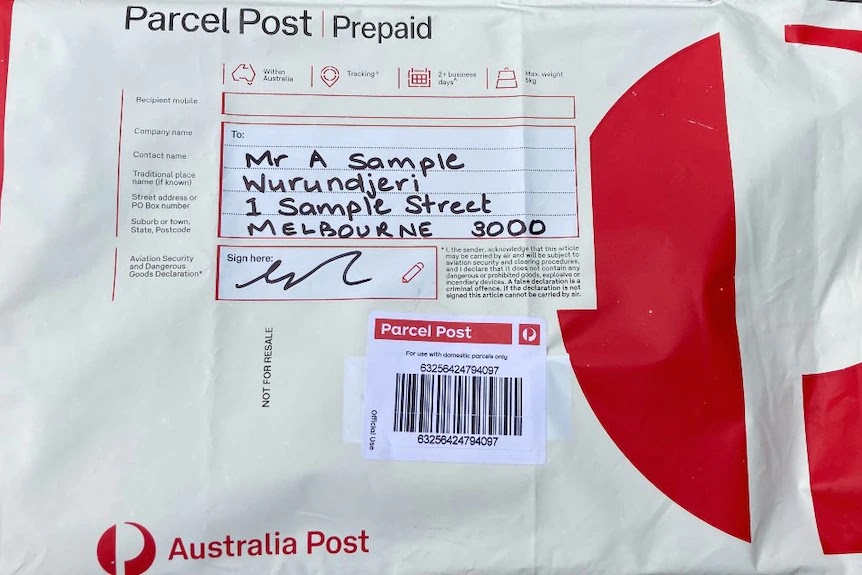
Australians will be prompted to include traditional place names when addressing letters and parcels from July 2021, after a community campaign


ABC News, 5 July 2021:


Australians will be prompted to include traditional place names when addressing letters and parcels from July 2021, after a community campaign.(ABC News: Margaret Paul)


Australians will now be prompted to include traditional place names when addressing letters and parcels, after a community campaign.


The new Australia Post packaging will include a dedicated spot where customers can choose to include the First Nation country, just above the street address on a letter or parcel.


It will be phased in as stock becomes available, as part of NAIDOC week.


Gomeroi woman Rachael McPhail has been petitioning Australia Post to make the change, as part of a campaign to include traditional place names in all addresses.


"For every town, for every place in this country, we have an original name, and it's important to use them as a celebration and to recognise the history and the connection of First People to country," she said.


She said the next step was compiling a comprehensive database of all traditional place names, so people could easily work out where to send their mail.


She said that would require a national, collaborative effort.


"What that entails is comprehensive and respectful consultation with First Nations people, elders, and community leaders, all around the country," she said.


"We need to make sure we are recording and collating that information all around the country."…….


Monday, 5 July 2021

COVID-19 Delta Variant Outbreak 2021: It seems that in New South Wales a percentage of the state population has reached 'peak herd stupidity'


NSW Police Public Site, 3-4 July 2021:


An unregistered car parked in a ‘no stopping’ zone in a Central West town has led police to issue $1000 fines to three Sydney people who breached Public Health Orders overnight.


Officers from Orana Mid-Western Police District noticed an unregistered car parked in a no parking zone outside a hotel on Bolaro Street at Dunedoo, 90km north-east of Dubbo, about 8.50pm (Saturday 3 July 2021).


They identified the driver and discovered he was one of three people who’d travelled from Sydney that day and were booked to spend the night in the town. A 44-year-old man from Haberfield, a 51-year-old man from Fairfield West and a 38-year-old woman from Burwood have now been issued $1000 PINs for not comply with noticed direction 7/8/9 Covid-19. They have also been issued traffic infringement notices for driving an unregistered vehicle and being parked in a ‘no stopping’ zone.


Four people were yesterday each issued with $1000 PINs after being stopped by Chifley Highway Patrol at Little Hartley, about 150km west of their home in Maroubra. Officers stopped the group – two women aged 23 and 25, and two men aged 25 – on the Great Western Highway about 9am (Saturday 3 July 2021). All four were directed to return to Sydney.


The owner of a Mascot fruit shop and an employee of the same shop were also issued with PINs for breaching the PHO overnight. Officers from South Sydney Police Area Command attended a fruit shop on King Street, Mascot, about 6.30pm, after receiving complaints from the public the business was not using QR sign-in protocols and staff were not wearing masks.


Police spoke with the owner, a 57-year-old man, and an employee, a 26-year-old man, neither of whom were wearing masks. The older man was issued a penalty notice for not comply with noticed direction 7/8/9 Covid 19, while the younger man was issued a penalty notice for not wear fitted face covering in retail/business premises. They have been fined $1000 and $200 respectively.


Staff from a store in Bowral have also been charged with further breaches of the Public Health Act after officers attached to The Hume PD conducted a compliance check yesterday, and found 20 people inside allegedly not wearing face masks. Police requested those not consuming food or drink to put a face mask on; however, will allege the female staff, aged 62 and 43, refused. They were arrested and taken to Southern Highlands Police Station where they were charged with not wear fitted face covering in retail/business premises. They’ve been bailed to appear in Moss Vale Local Court on Tuesday 17 August 2021.


In total, 86 PINs were issued yesterday and of those 55 were $200 infringements for failing to wear a fitted face covering.


Police continue to appeal to the community to report suspected breaches of any ministerial direction or behaviour which may impact on the health and safety of the community.


Anyone who has information regarding individuals or businesses in contravention of a COVID-19-related ministerial direction is urged to contact Crime Stoppers: https://nsw.crimestoppers.com.au. Information is treated in strict confidence. The public is reminded not to report crime via NSW Police social media pages.


~~~~~~~~~~~~~~~~~~~~~~~~~~~~


Two women have been charged after further breaches of the Public Health Act were detected at a café in the Southern Highlands today.


About 11.45am (Saturday 3 July 2021), officers attached to The Hume Police District attended a food store on Bowral Street, Bowral, to ensure compliance with the current Public Health Orders.


Police observed 20 people at the store - including two female employees serving customers – allegedly not wearing face masks while inside the premises.


Police requested staff and customers, not consuming food or drink, to put a face mask on.


The employees expressed they had no intention of complying and the two women, aged 62 and 43, were arrested and taken to Southern Highlands Police Station.


Both women were charged with not wear fitted face covering in retail/business premises and will face court at a later date.


Police continue to appeal to the community to report suspected breaches of any ministerial direction or behaviour which may impact on the health and safety of the community.


~~~~~~~~~~~~~~~~~~~~~~~~~~~~


~~~~~~~~~~~~~~~~~~~~~~~~~~~~


9News, 3 July 2021:


Police and health authorities are again pleading with the Sydney public after hundreds across the city were seen out and about on Saturday, some ignoring social distancing rules as dozens of fines were handed out for face mask breaches.


As the city was treated to a warm sunny winter weekend day, hundreds were seen packing local beaches and parks to soak up the rays.


With NSW recording 35 new local cases of coronavirus today, nine of which were exposed to the public while infectious, health authorities are warning the lockdown may not be lifted on July 9 as hoped….


Hundreds were out at community markets today, in close proximity to each other. (9News)


The Sydney Morning Herald, 4 July 2021:


Up to a dozen St George Illawarra players are under investigation for a potential biosecurity breach involving a reported house party hosted by star forward Paul Vaughan that prompted noise complaints from neighbours…..


NSW Police said officers attended Vaughan’s Shellharbour home around 9.40pm on Saturday night following reports of visitors there. Police are considering fining the group due to the public health order breach…..


NSW Health, 4 July 2021:


Stay at home orders apply to Greater Sydney including the Blue Mountains, Central Coast, Wollongong and Shellharbour until 11.59pm on Friday, 9 July 2021.

Sunday, 4 July 2021

These days they are singing about their prime minister in Australia - feel free to join in


Lyrics for "The Ballad of Scotty" aka "He Doesn't" courtesy of @MrDenmore 


Queensland, West Australian and Victorian state police services have admitted trying to access logs of contract tracing services created since the start of the COVID-19 pandemic – the other five state & territory police services denying having done so thus far


Crikey, 1 June 2021:


Police across the country are attempting to access personal data from mandatory COVID-19 check-in apps for reasons other than contact tracing, despite promises that the data would only be used for public health reasons.


Police in Queensland, Western Australia and Victoria have all owned up to trying to access logs of data created by Australians using check-in applications as part of their investigations, and enquiries by Crikey suggest that police in other states could also access this data using a warrant.


Privacy advocates have slammed state governments for lying to Australians about what the data would be used for.


We were told this data would only be used for contact tracing. Police made that a lie,” Electronic Frontiers Australia’s Justin Warren told Crikey. “People will remember that next time governments want us to give them data about ourselves.”


One of the major tools in fighting the spread of COVID-19 and managing outbreaks has been contact tracing, which has been aided by various tech solutions.


When the federal government first proposed the contact tracing app COVIDSafe (which used Bluetooth to log close contacts), it responded to fears of a mass surveillance state by announcing the data would not be used by police.


But adoption of a QR code check-in system — the widely used, low-tech alternative now mandatory in many places around the country — was left to states to implement. As it turns out, these states did not assume the same protections for their citizens, meaning that data volunteered in the name of public health has been accessed for other reasons…..


Read the full article here.