Friday, 8 July 2022

It no use pretending otherwise; individuals, families & communities within the NSW ~100km wide coastal zone will see more flooding - might be within the next four months or the next four years - so here is some EPA advice on safely dealing with flood waste in your house or in your yard


NSW Environmental Protection Agency (EPA), NEWS:


NSW storm and flood updates 2022

27 June 2022


Find out how to keep your community safe after flooding; what to do with waste material and hazardous materials; and how to clean a flood-affected property.


If you are impacted by the floods, Service NSW is providing a one-stop shop for people and businesses to access all available recovery services. Call 13 77 88 or visit service.nsw.gov.au to access the following information:

  • Accommodation advice

  • Relevant charitable services

  • Mental health and wellbeing services

  • Support for businesses

  • Financial assistance

  • Insurance and legal support

  • Replacing lost ID


Building site run-off


If you see run-off from a building site or your property is affected by run-off because of the floods or heavy rainfall, please contact your council to report it. Councils are the environmental regulator for local construction projects. The EPA can help you with major or state significant construction projects and you can report any issues to the EPA’s Environment Line on 131 555.


Waste levy waivers


Fifty-seven local government areas have been subject to natural disaster declarations and to help residents in these communities dispose of their flood-damaged goods and possessions, the NSW Government waste levy has been waived.


Residents can now take flood-affected household items to their local landfill without having to worry about the cost.


Building materials, furniture and any other flood-generated waste is covered by the waiving of the levy, which applies to waste from both public and private land.


Councils will specify on their website which waste facility is taking debris, opening hours and whether there are special requirements for disposing of flood damaged waste.


Waste facilities will need to ensure the waste is flood generated before they can waive the Government’s waste levy. Council waste facility gate fees may still apply.


Council areas where the waste levy has been waived


Ballina Council

Bayside

Bellingen Council

Blacktown

Blue Mountains

Byron Shire Council

Camden

Campbelltown

Canterbury Bankstown

Central Coast

Cessnock City Council

Clarence Valley Council

Coffs Harbour Council

Cumberland City Council

Dungog Shire Council

Fairfield

Georges River

Hawkesbury

Hornsby Council

Inner West

Kempsey Council

Kiama

Ku-Ring-Gai

Kyogle Council

Lismore Council

Liverpool

Maitland City Council

MidCoast

Muswellbrook Shire Council

Nambucca Council

Newcastle

Northern Beaches

Parramatta

Penrith

Port Macquarie / Hastings Council

Richmond Council

Ryde

Shellharbour

Shoalhaven

Singleton Shire Council

Sutherland

The Hills Council

Tweed Council

Upper Hunter Shire Council

Wingecarribee

Wollondilly

Wollongong


Council areas where the waste levy does not apply, but where residents may use a nearby facility in an area where the levy has been waived


Armidale Regional Council

Bega

Eurobodalla

Mid-Western Regional Council

Glen Innes Severn Council

Goulburn Mulwaree Council

Lithgow City Council

Queenbeyan-Palerang Regional Council

Snowy Monaro Regional Council

Tenterfield Council


Community safety


Safety is the number one priority for those in flood impacted areas. Please be alert for instructions from NSW government departments that are responding to the flood and be aware of evacuation orders from the NSW State Emergency Service.


Avoid flood impacted areas and damaged building or structures, unless they are deemed safe by authorities. Be mindful that there may be large submerged debris in flood waters which can be an unseen hazard.


If an immediate response is required, where there is imminent risk to the community or the environment, call Fire and Rescue NSW on Triple Zero (000), including for a HAZMAT response.


When collecting and removing rotting material such as spoiled food or vegetation, always wear a P2 face mask. Wash your hands thoroughly after handling flood-generated waste.


While cleaning up after flooding, be mindful where materials might contain asbestos and take appropriate precautions.


If you encounter material that you suspect may be hazardous please avoid it and call Environment Line on 131 555 or info@epa.nsw.gov.au.


Dealing with waste material when clean-up commences


During clean-up, it is important to protect yourself and to be mindful of the environment around you. If you are in in a Disaster-Declared Area, your local council is your initial point of contact to seek assistance or phone Service NSW on 13 77 88 for information on what assistance is available. Operators will refer you to the appropriate support.


We are working with reginal councils to identify temporary waste storage sites.


If you are not in a Local Government Area covered by the NSW Government’s Immediate Relief Teams, liaise with your council about arrangements for clean-up in your area.


You can start managing your waste by separating it into the following groups:


  • food waste (use your red lid bin first. If the bin is full put food waste in a container on the kerbside)

  • hard bulk waste (furniture, carpets, mattresses)

  • green waste (vegetation)

  • scrap metal (whitegoods and e-waste)

  • hazardous materials (gas bottles, paint, pool chemicals, unlabelled drums)

  • Separating waste into the different waste types means we will be able to send the right waste to the right place and save valuable landfill space.


The NSW Government waste levy is being waived for the 17 local government areas that have been subject to natural disaster declarations.


Building materials, furniture and any other flood-generated waste are included in the levy waiver and this applies to waste from both public and private land.


Find out about water safety around flood waters and how to deal with flood mud, household and hazardous chemicals and asbestos if you have been impacted by storms or floods


Cleaning your flood affected property


  • Every area affected by flood water inside your house needs to be cleaned, including empty refrigerators and cupboards.

  • Wash mud, dirt, and debris from your house with a hose, starting at the highest point and working down to ground level.

  • Where possible, remove all wet items such as floor coverings, rugs, mats, furniture, bedding, linen and clothing. If floor coverings are removed, thoroughly clean and dry the floor underneath before new material is laid.

  • Begin drying out the house as soon as floodwaters recede – open doors and windows during dry days, use fans where possible, check for trapped water and mud in wall or floor cavities.

  • Hard-surface floors, walls, benches and sinks should be thoroughly cleaned with hot soapy water and disinfected by wiping or spraying surfaces with a chlorine bleach solution or a product labelled as a disinfectant. Once disinfected, allow to dry.

  • Flood-affected mattresses are difficult to treat and may need to be discarded.

  • Furniture, such as lounge chairs, may be air dried in the sun then sprayed thoroughly with a disinfectant solution. Consult a local furniture renovating company if you are unsure about their condition.

  • Soft toys should be discarded. Solid toys should be washed and then disinfected.


Thursday, 7 July 2022

COVID-19 Omicron cases on the rise again in NSW and an increase in hospitalisation expected


According to NSW Health, as at 4pm on 5 July 2022 there were 124,706 confirmed active COVID-19 cases in the state, including 13,775 newly confirmed COVID-19 infections.


Within the newly infected group were 338 individuals from across the 7 local government areas in Northern NSW.


A total of 1,822 infected people were currently hospitalised, with 64 of these COVID-19 inpatients in intensive care of which number 16 individuals required ventilation.


Sadly there were 20 confirmed COVID-19 deaths within that 24 hour reporting period.


The Sydney Morning Herald, 5 July 2022:


NSW is facing a coronavirus wave tipped to rival the Omicron summer as the state government and health bodies push for better access to antiviral treatments and expanded eligibility for fourth doses.


Chief Health Officer Kerry Chant said the NSW COVID-19 wave was expected to peak in late July or early August with hospitalisations similar to those in January. She urged the third of people who have not yet had a booster shot to do so urgently.


Disregard anything we’ve said about two doses. It’s three doses or more,” Chant said.


A national surge in coronavirus cases is being driven by the newer BA.4 and BA.5 Omicron variants, which better evade immunity from previous infection and vaccination.


Throughout June, about 30 per cent of virus deaths – three-quarters of whom were in their 80s and 90s – were not up-to-date with their shots.


But with fourth doses currently restricted to people over 65 or those with certain health conditions, Chant said she would support national vaccine advisory group ATAGI expanding eligibility when it meets on Wednesday……


Representative bodies for healthcare workers, including the Australian Medical Association and the Pharmaceutical Society of Australia, have expressed concern about waning immunity as infections rise. While a single booster shot is considered to still provide significant protection against severe illness and death, most doctors, nurses and pharmacists are now well over six months since their third dose.


In addition to expanding fourth doses, Chant and Hazzard both said they would support clearer eligibility criteria for oral antiviral COVID-19 treatments Paxlovid and Lagevrio.


Federal Health Minister Mark Butler has directed the Pharmaceutical Benefits Advisory Committee to review its conditions for subsidised access, labelling them “too restrictive”.


Antivirals are currently available for people aged 65 and over with two high-risk factors; those aged 75 and over with one high-risk factor; or moderately to severely immunocompromised people. People in these age groups may be recommended a particular antiviral, due to interactions with other medications…..


With 1782 people with COVID-19 in hospital on Tuesday, Chant said she had not recommended further public health restrictions. Instead, she encouraged the public to wear masks and take steps to reduce their risk of catching winter viruses including flu……


Full article can be read here.


Wednesday, 6 July 2022

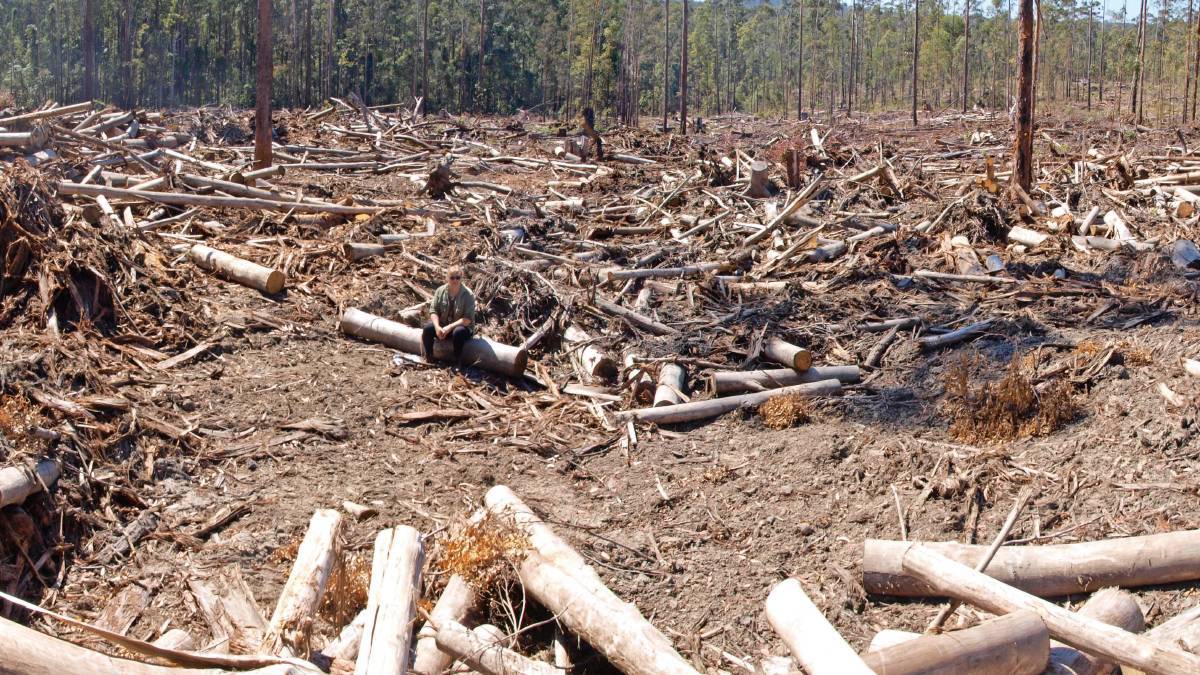
In New South Wales 75 hectares of wildlife habitat and carbon storage is bulldozed or logged every day. Something to remember when filling in your ballot paper at the March 2023 state election


IMAGE: Macquarie Port News


Nature Conservation Council (NSW), media release, 30 June 2022:


75 hectares of habitat lost each day in NSW


Latest land clearing data shows 75 hectares of wildlife habitat is bulldozed or logged every day in NSW, almost twice the average annual rate recorded before the Coalition overhauled nature laws in 2016. [1]


The annual Statewide Land and Tree Study (SLATS) data shows 27,610 hectares of native forest were destroyed for farming, forestry and development in 2020.


This astounding rate of deforestation is a disaster for wildlife and the climate. We call on the government to take urgent action to reverse the trend,” Nature Conservation Council Chief Executive Chris Gambian said.


In just one year we have lost an area of native forest nearly double the size of Royal National Park. It is simply unsustainable.


Using widely accepted data on wildlife population densities, clearing on that scale would have killed up to 4.6 million animals - mammals, birds and reptiles – in just 12 months. [2]


Native forests in NSW can absorb up to 44 tonnes/hectare of C02 annually [3].


Protected from logging, NSW public native forests could store an additional 900 million tonnes of CO2 - equivalent to six years of NSW emissions.


These forests are a critical carbon sink that we need to protect to pursue meaningful action on climate change.


After the government weakened land clearing laws in 2016, deforestation rates doubled and have remained at these dangerously high levels ever since.


The Coalition promised it’s new laws would enhance protections for bushland and wildlife.


These figures, and the rising number of threatened species, shows the laws completely fail to deliver on that promise.


More than 1,040 plants and animals are now threatened with extinction in NSW, about 40 more than when the scheme was introduced.


The government must stop uncontrolled deforestation on private land and in state forests if it is going to tackle the extinction crisis.”


The SLATS data show a 43% increase in the amount of vegetation cover lost in production forests, presumably due to the 2019-20 Black Summer Bushfires.


Native forests in NSW can absorb up to 44 tonnes/hectare of C02 annually,” Mr Gambian said.


Protected from logging, NSW public native forests could store an additional 900 million tonnes of CO2 - equivalent to six years of NSW emissions.


These forests are a critical carbon sink that we need to protect to pursue meaningful action on climate change."


REFERENCES


[1] Land cover change reporting, DPIE, June 2022


[2] Native Animals Lost to Tree Clearing in NSW 1998-2015, WWF-Australia, 2018


[3] Green Carbon report, The Wilderness Society, 2008 (figure of 44 tonnes/hectare of CO2 arrived at by multiplying the figure of 12 tonnes of Carbon a year by 3.67)


The Berejiklian-Maguire saga continues behind closed doors at NSW ICAC inquiry


Reading between the lines it seems Premier Dominic Perrottet is hoping to have a final NSW Independent Commission Against Corruption determination in the Operation Keppel Public Inquiry by October 2022, concerning former premier & former Liberal MP for Willoughby Gladys Berejiklian, so that he can create some clear air before the March 2023 state election.


Perhaps optimistically believing that state voters will forget that the stench of Liberal corruption is not just attached to the federal parliamentary branch of this political party.


The Sydney Morning Herald, 5 July 2022:


The anti-corruption commissioner overseeing the inquiry into former premier Gladys Berejiklian’s conduct has had her term renewed for another six months in the latest extension to the high-profile probe.


Former Court of Appeal judge Ruth McColl, SC, will continue as a temporary commissioner in the investigation known as Operation Keppel until the end of October, the Independent Commission Against Corruption (ICAC) has confirmed.


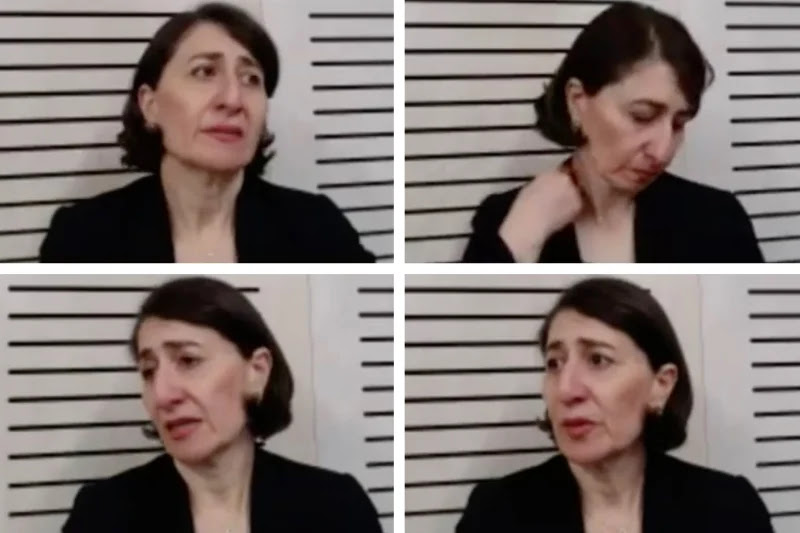
Gladys Berejiklian was grilled before the NSW ICAC for two days last year. CREDIT:ICAC


Read the full article here.


Tuesday, 5 July 2022

If you are a Yamba resident or have a holiday home in the town this Valley Watch-sponsored community meeting concerning Yamba Flood Planning being held on Saturday 9 July 2022 will be of interest to you


As at 10 August 2021 there were 6,670 people living in Yamba & environs with 805 visitors temporarily resident in various hotel, motel, caravan park & holiday rental accommodation. That 7,475 population is estimated to double during peak holiday periods as holidaymakers flock to the town. 

It appears that local government is hoping to grow the Yamba and environs resident population by at least 8,862-9,000 people in the next 19 years without ever providing the required "safe occupation and efficient evacuation of people" in times of flooding and that population and development not "exceed the capacity of existing evacuation routes for the surrounding area in the event of a flood".

As the one road leading both in and out of Yamba (which is also the official and only evacuation route) travels over one bridge and two causeways before reaching the next town at the end of an est. 19km journey and, in addition that road can be cut by deep stormwater and/or flood waters at one or all of another nine points before flood prone Maclean township is reached, then it can hardly be called a safe and efficient mass evacuation route even now.

It has also been made very clear to Yamba residents that NSW emergency services consider that safe evacuation is the resident's individual responsibility.


Sections of Yamba's official evacuation route on 1 March 2022
IMAGES: Yahoo! News


Problems with existing land currently under development in Yamba


West Yamba From O'Grady's Lane, flooding in Feb-March 2022 

by clarencegirl on Scribd


Park Ave and 135 Yamba Road Photos during Feb-March 2022 

localised flooding in Yamba, Clarence Valley

by clarencegirl on Scribd

Monday, 4 July 2022

CLIMATE CHANGE & NEW SOUTH WALES: filed under 'What could possibly go wrong?"


Global sea levels have already risen by 20cm (between 1901 and 2018) and the Australasia region, which includes New Zealand, has experienced even higher rates than the global average. More coastal flooding is expected as levels rise even further. The latest predictions from the Intergovernmental Panel on Climate Change (IPCC) report reveal further increases are largely locked in, with a rise of about 15cm to 30cm [0.3m] expected by around 2050. [news.com.au, 21 September 2021]


Coastal Risk Australia updated inundation mapping for
Lower Clarence Valley at 0.3m rise above mean sea level


Coastal Risk Australia updated inundation mapping for
Lower Clarence Valley at 0.6m above mean sea level


I find it immeasurably sad that the NSW Government and coastal local government councils continue to plan development based on pre-Climate Emergency conditions. 

It's a though every climate change induced disaster and widespread adverse weather event that has occurred in the last 22 years - from the Millennial Drought to stronger East Coast Lows to constant coastal erosion eating away at foreshores to mega-bushfires to devastating record flooding to what appears to be a food shortage cycle developing - are still matters these two tiers of government can only deal with as compartmentalised abstracts when it comes to both short-term and long-term urban planning.

They still see low lying coastal areas with soft shore lines and city, town & village precincts slap in the middle of coastal floodplains already under stress, as capable of development far into the future - when in reality many may well be reduced in area or completely uninhabitable within the next 30 to 100 years. 


Clarence Valley Independent, 29 June 2022:


The state government is calling for public submissions about changes to Clarence Valley Council’s Business and Industrial Zones, which will be called Employment Zones, under new Local Environment Planning laws.


In May 2021, The NSW Department of Environment and Planning DEP proposed that existing Business and Industrial zones be replaced with five Employment zones and three supporting zones under the Standard Instrument Local Environment Plans SILEP Order, 2006.


Since then, DEP planners have been working with Clarence Valley Council planning staff to ensure its Local Environment Plan ‘is amended consistent with the intent of the state government reforms, while also ensuring the land-use planning outcomes are appropriate to the Clarence Valley.’


When the Independent searched what impact the changes would have on a Yamba Street, Yamba address and a Prince Street, Grafton property, we discovered the premises would switch from a Business 2 Local Centre to an Employment 1 Local Centre.


Under the planning changes, home business, home industries and home occupations will be permitted without planning consent, adhering to the Employment zone objective ‘to provide a range of retail, business and community uses that serve the needs of people who live, work or visit the area.’


The new Employment zone also expands land use permissibility in both Grafton and Yamba, with a wider variety of businesses and land uses permitted than under previous laws, including serviced apartments, hotel and motel accommodation, local distribution premises and recreation areas…...


The zones will also address current barriers within the planning system that limit the ability of businesses to establish, expand or adapt.


The new LEP zones are designed to better support councils in the delivery of the strategic vision contained in their Local Strategic Planning Statements and background studies.


The spokesperson said the Employment zones will be in place within individual LEPs by December 1, when the Business and Industrial zones will be repealed.


Stakeholders are invited to make submissions on the changes to the NSW DEP until July 12.


To investigate the changes under the new employment zones in your area visit the NSW DEP Website www.planning.nsw.gov.au/employment-zones-reform


Sunday, 3 July 2022

A Stunning Collection Of Twenty Five Black And White Portraits Of Yaegl Elders on Exhibition at Old Kirk-Yamba Museum in River Street from Monday 4 July to Sunday 24 July 2022


KEEPING OUR STORIES 'PORTRAITS OF YAEGL ELDERS'


A STUNNING COLLECTION OF TWENTY FIVE BLACK AND WHITE PORTRAITS OF YAEGL ELDER


On exhibition at the Old Kirk-Yamba Museum, River Street, Yamba NSW.


From Monday 4th July to Sunday 24th July 2022.

Official book launch Friday 22nd July 10.30am 


Note: 

Images (left to right)

Top Row Middle: Mrs Lillian Williams.

Bottom Row Middle and Far Right: Reverend Lenore Parker-Randall & Mrs. Lois Birk